Occupational Therapy
Helping children develop the skills they need to participate confidently and independently in everyday life.
Every child develops differently. Some children may experience difficulties with fine motor skills, sensory processing, attention, coordination, handwriting, play, self-care, or participation at school.
Book an assessment in Chennai
Occupational Therapy helps children build the functional skills required for their everyday “occupations”, playing, learning, dressing, eating, socializing, and participating in family and community activities.
Therapy is individualized, child-centred, and activity-based. It may include therapeutic play, sensory-motor activities, fine motor training, visual-motor tasks, self-care practice, environmental adaptations, and parent guidance.
The goal is not only to improve individual skills. It is to help children participate with greater confidence, independence, and success at home, school, and in the community.
Crossing the Midline: A Key Skill for Learning and Movement
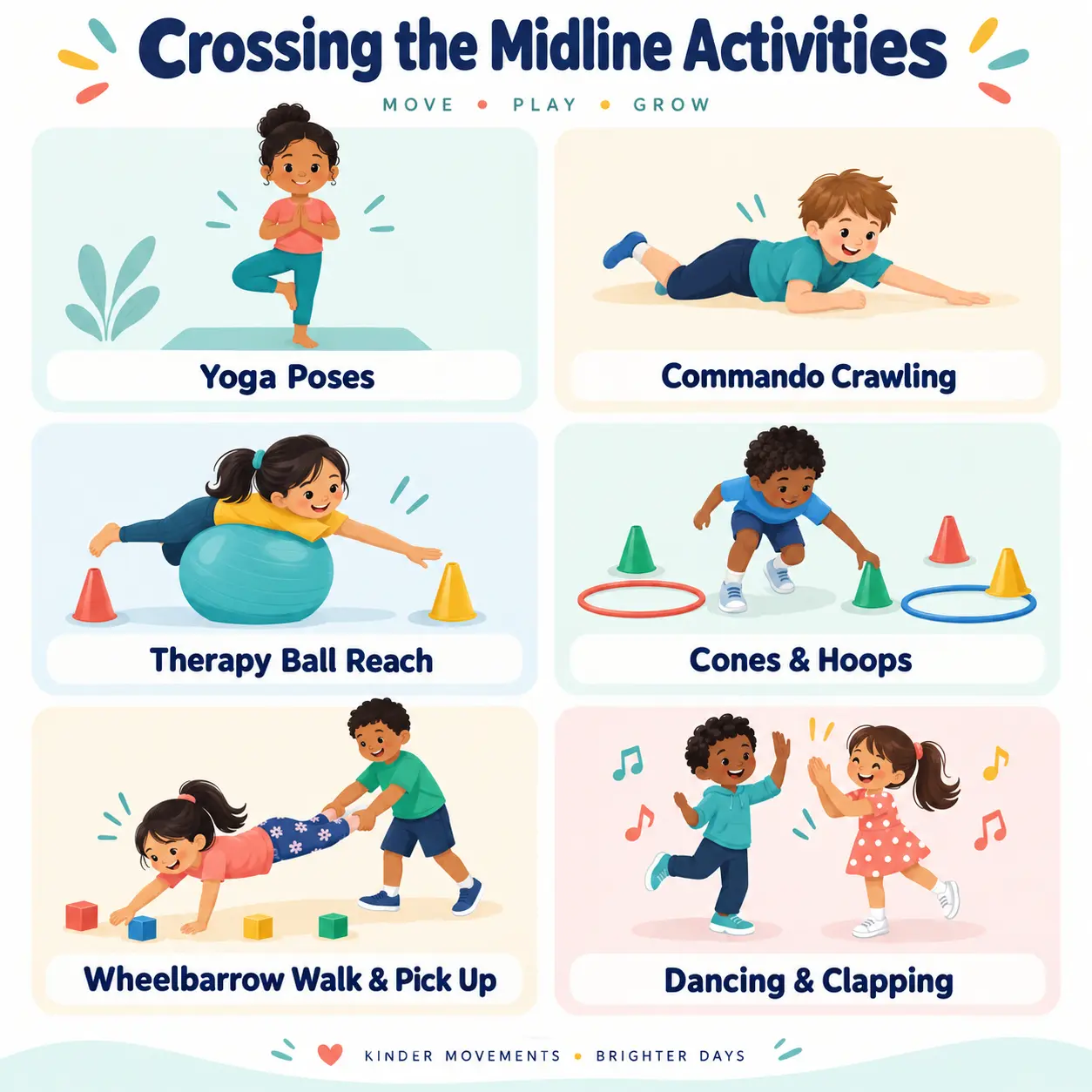
One of the most important yet often overlooked developmental skills in children is crossing the midline. This skill plays a major role in how your child learns, moves, and performs everyday activities.
What Does “Crossing the Midline” Mean?
Imagine an invisible line dividing your child’s body into left and right halves. Crossing the midline happens when your child reaches across this line using one side of their body.
For example:
- Using the right hand to pick up something on the left side
- Writing across a page without switching hands
- Stepping across the body while walking or playing
Why Is This Skill Important?
Crossing the midline is essential because it helps both sides of the brain work together efficiently.
It supports:
- Brain coordination: Strengthens communication between both brain hemispheres
- Hand dominance: Helps your child develop a preferred hand for tasks like writing
- Reading and writing: Makes it easier to track words from left to right
- Smooth movements: Improves balance and coordination in daily activities
Signs Your Child May Be Struggling
Some children may avoid crossing the midline without you realizing it.
Look out for:
- Frequently switching hands during activities
- Turning their whole body instead of reaching across
- Difficulty with reading or tracking lines
- Challenges with tasks like dressing, cutting, or writing
- Clumsy or uncoordinated movements
Simple Activities You Can Try at Home
The good news? This skill can be improved through play!
- Yoga Poses
- Commando Crawling
- Crossing the Midline Activities
- Cones & Hoops
- Balance Cushion & hoops/cones
- Wheelbarrow Walk Pick Up
- Dancing & Clapping
Try:
- Cross-crawl exercises (opposite elbow to knee)
- Drawing big figure 8s (infinity shapes)
- Throwing and catching with opposite hands
- Fun games like "touch your left foot with your right hand"
Understanding Primitive Reflexes
Primitive reflexes are automatic movements that babies are born with. These reflexes help with early survival and development, and they should naturally integrate as the child grows.
Why Are They Important?
If these reflexes do not fully integrate, they can affect:
- Movement and coordination
- Attention and focus
- Emotional regulation
- Learning abilities
Signs of Retained Reflexes
- Poor balance or coordination
- Difficulty sitting still
- Delayed motor skills
- Sensory sensitivities
- Emotional outbursts or low frustration tolerance
How Can Occupational Therapy Help?
Occupational therapy can help integrate retained reflexes through specific movement-based activities.
With consistent practice, children may experience:
- Improved focus and attention
- Better posture and coordination
- Increased emotional control
- Greater ease in learning tasks
Helping Your Child Regulate Their Emotions and Body
Children are not born knowing how to manage their emotions. They learn this over time with support from caregivers.
Understanding Regulation
Before a child can think or problem-solve, they need to feel calm and safe.
A helpful way to understand this is: Regulate → Relate → Reason
- First, help the child feel calm
- Then, connect with them emotionally
- Only then can they think and respond appropriately
Signs of Dysregulation
- Tantrums or emotional outbursts
- Difficulty focusing
- Hyperactivity or restlessness
- Withdrawal or shutdown
Activities That Help Regulation
Movement Activities
- Walking, stretching, yoga
- Carrying or pushing objects (heavy work)
Rhythmic Activities
- Music, clapping, dancing
Breathing Activities
- Blowing bubbles
- Deep breathing exercises
Sensory Play
- Playdough, water play, tactile activities
Nature Time
- Outdoor walks
- Quiet time in natural environments
These activities help calm the nervous system and improve focus and behavior.
Building Visual Skills Through Play
Did you know that a large part of learning depends on how well a child processes visual information?
Visual perception is not just about seeing clearly. It is about understanding what is seen.
Important Visual Skills
- Visual attention: Focusing on relevant information
- Visual memory: Remembering what is seen
- Tracking: Following moving objects
- Figure-ground: Finding objects in busy backgrounds
- Spatial awareness: Understanding position and direction
Easy Ways to Support Visual Development
- Playing puzzles and matching games
- Scavenger hunts
- Watching and tracking moving objects (like a ball)
- Sorting and organizing activities
- Outdoor exploration
Understanding Your Child’s Senses
Children experience and understand the world through their senses. These sensory systems are the foundation for how they move, behave, learn, and respond to their environment.
While most people think of five senses, children actually rely on seven key sensory systems for development.
1. Vestibular System (Balance & Movement)
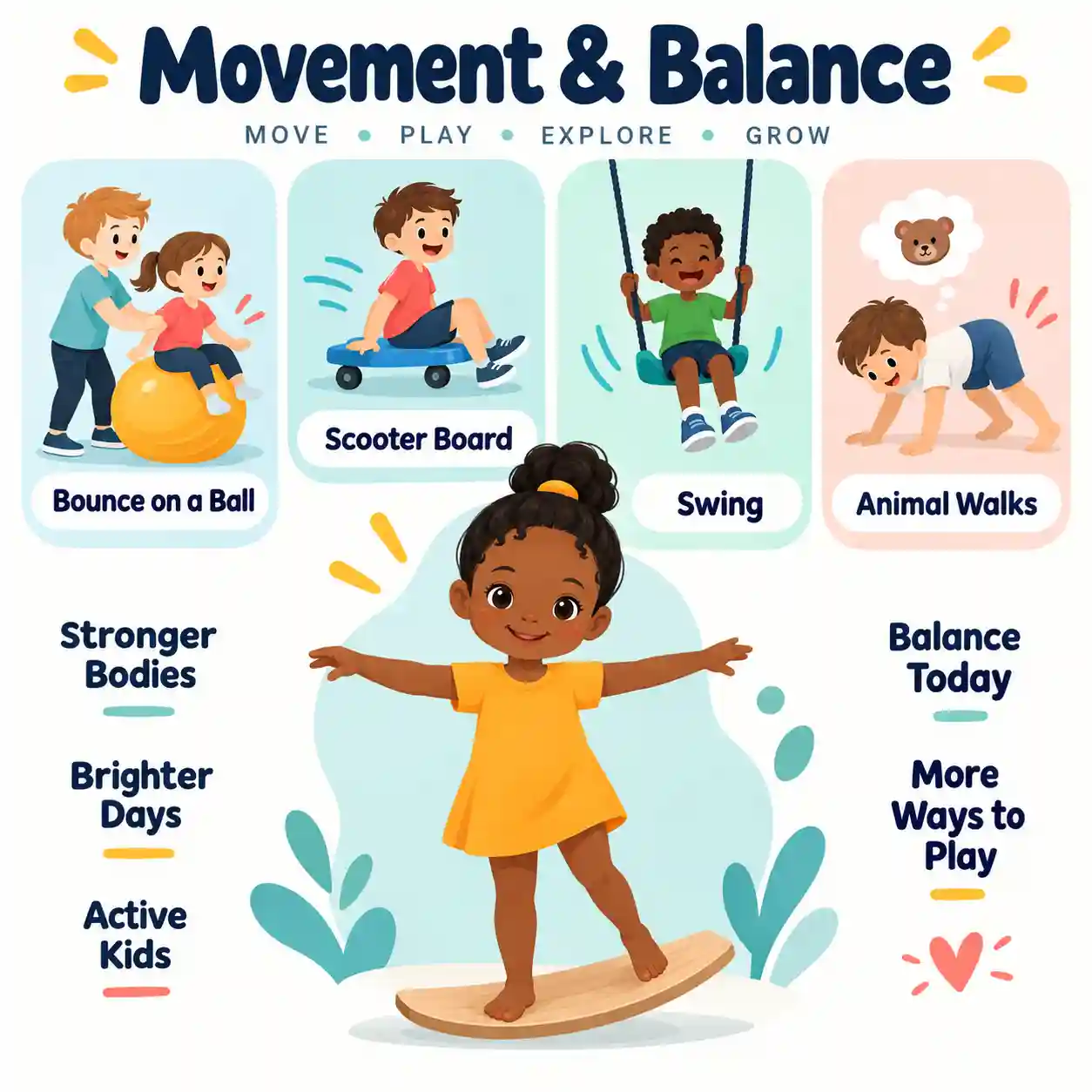
- SCOOTER BOARD
- SWING
- BOUNCE ON BALL
- ANIMAL WALKS
This system is located in the inner ear and helps your child understand:
- Balance
- Direction of movement
- Body position in space
Why It Matters
A well-functioning vestibular system helps your child feel secure while moving, sit upright, and focus in activities.
Signs of Difficulty
- Fear of movement (swings, slides)
- Poor balance or frequent falls
- Constant spinning or excessive movement
- Difficulty sitting still
Activities to Support It
- Swinging, sliding, climbing
- Spinning games (in moderation)
- Jumping or dancing
- Walking on uneven surfaces
2. Proprioceptive System (Body Awareness)
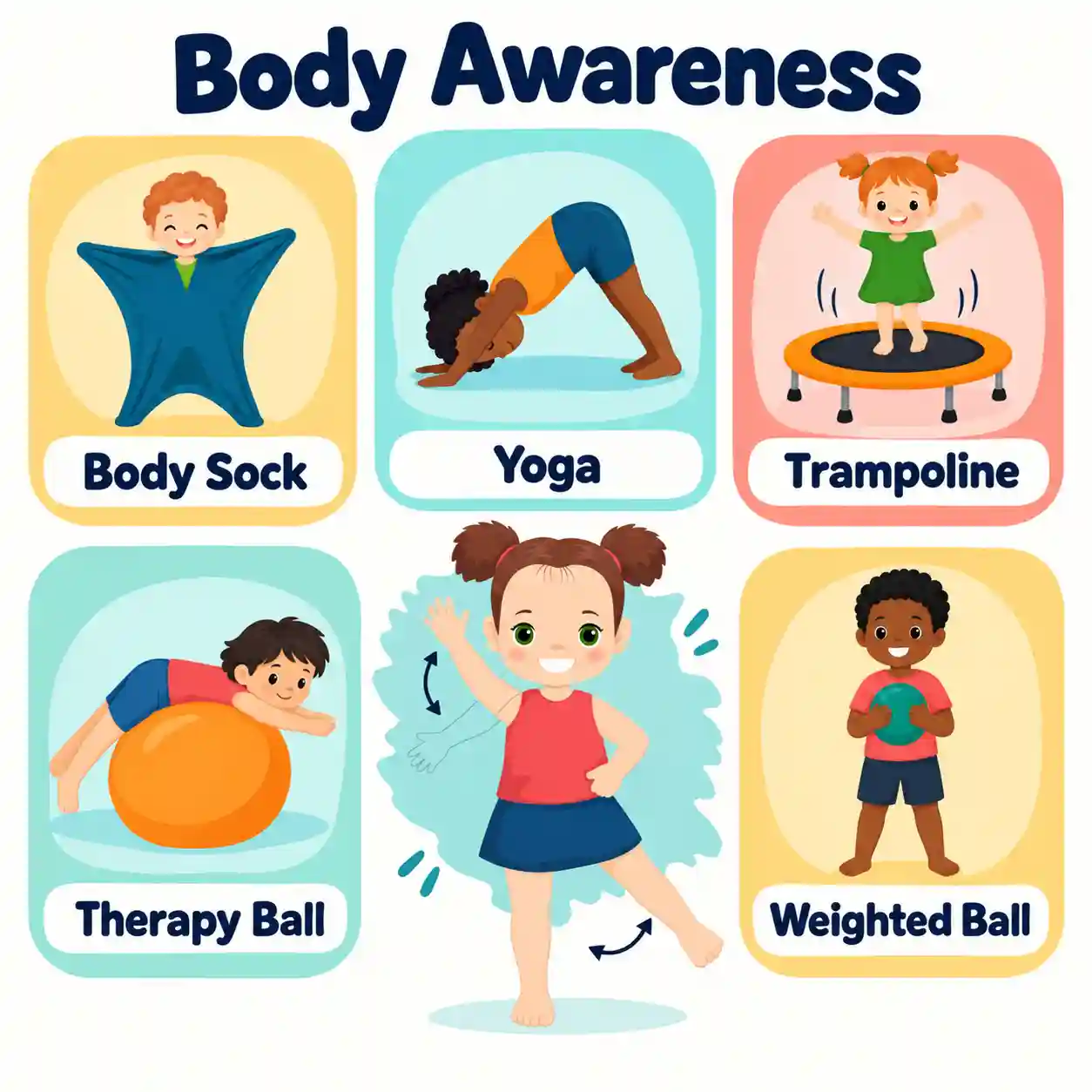
- YOGA
- TRAMPOLINE
- THERAPY BALL
- BODY SOCK
- WEIGHTED BALL
This system comes from muscles and joints and helps your child understand:
- Where their body is
- How much force to use
Why It Matters
It allows smooth, coordinated movement and helps children control their body during tasks.
Signs of Difficulty
- Clumsiness or bumping into things
- Using too much or too little force (e.g., breaking toys or weak grip)
- Seeking tight hugs or crashing into objects
- Difficulty with handwriting
Activities to Support It
- Pushing and pulling (toys, furniture)
- Carrying objects (books, bags)
- Jumping, climbing, crawling
- Playing tug-of-war
3. Tactile System (Touch)
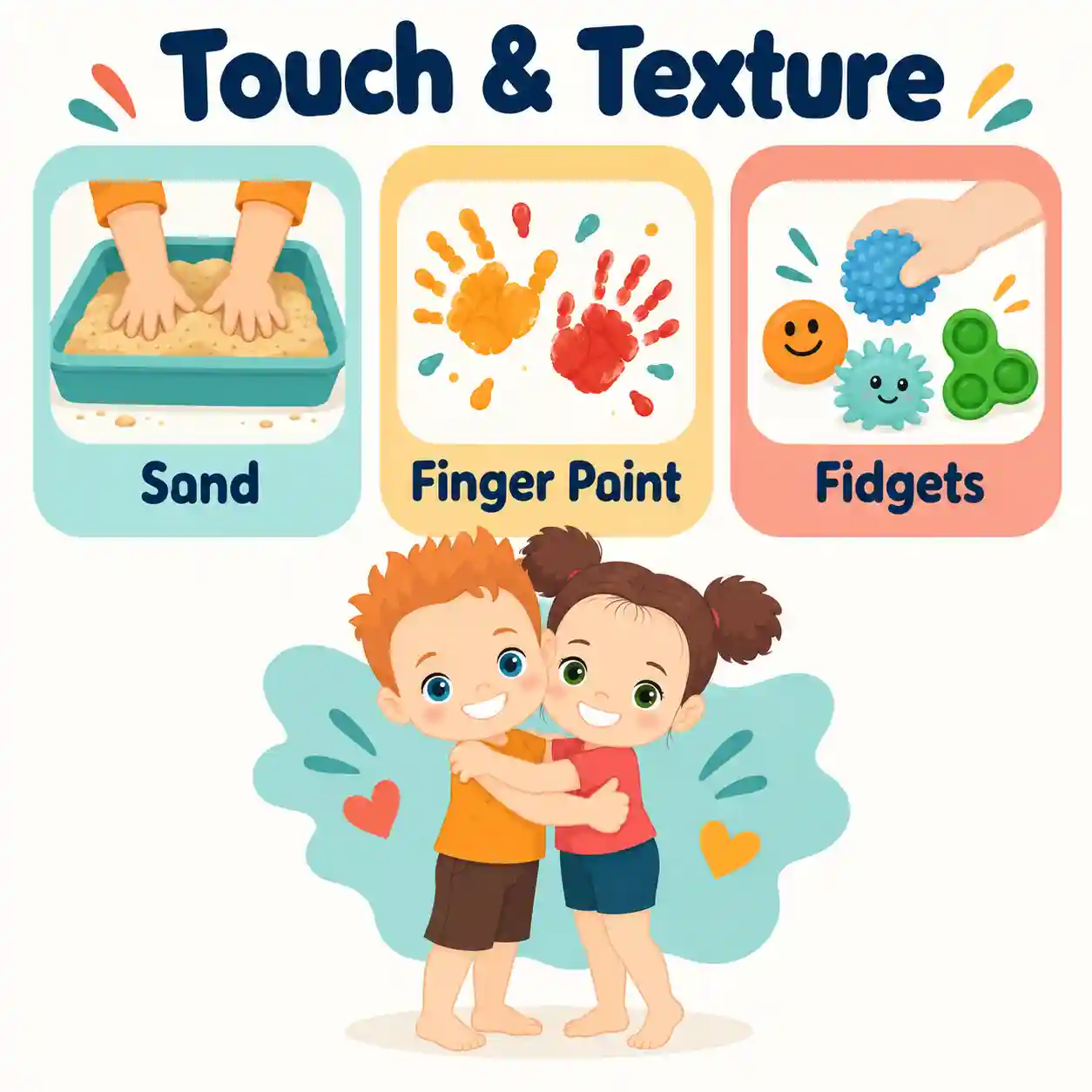
- SAND
- FINGER PAINT
- FIDGETS
This system helps your child process:
- Texture
- Temperature
- Pain and pressure
Why It Matters
It supports everyday tasks like dressing, eating, and interacting with objects.
Signs of Difficulty
- Avoiding messy play (sand, paint)
- Sensitivity to clothing textures or tags
- Discomfort with touch
- Not reacting to pain appropriately
Activities to Support It
- Playing with sand, water, slime, or dough
- Finger painting
- Exploring different textures safely
- Sensory bins with rice or beans
4. Auditory System (Hearing)
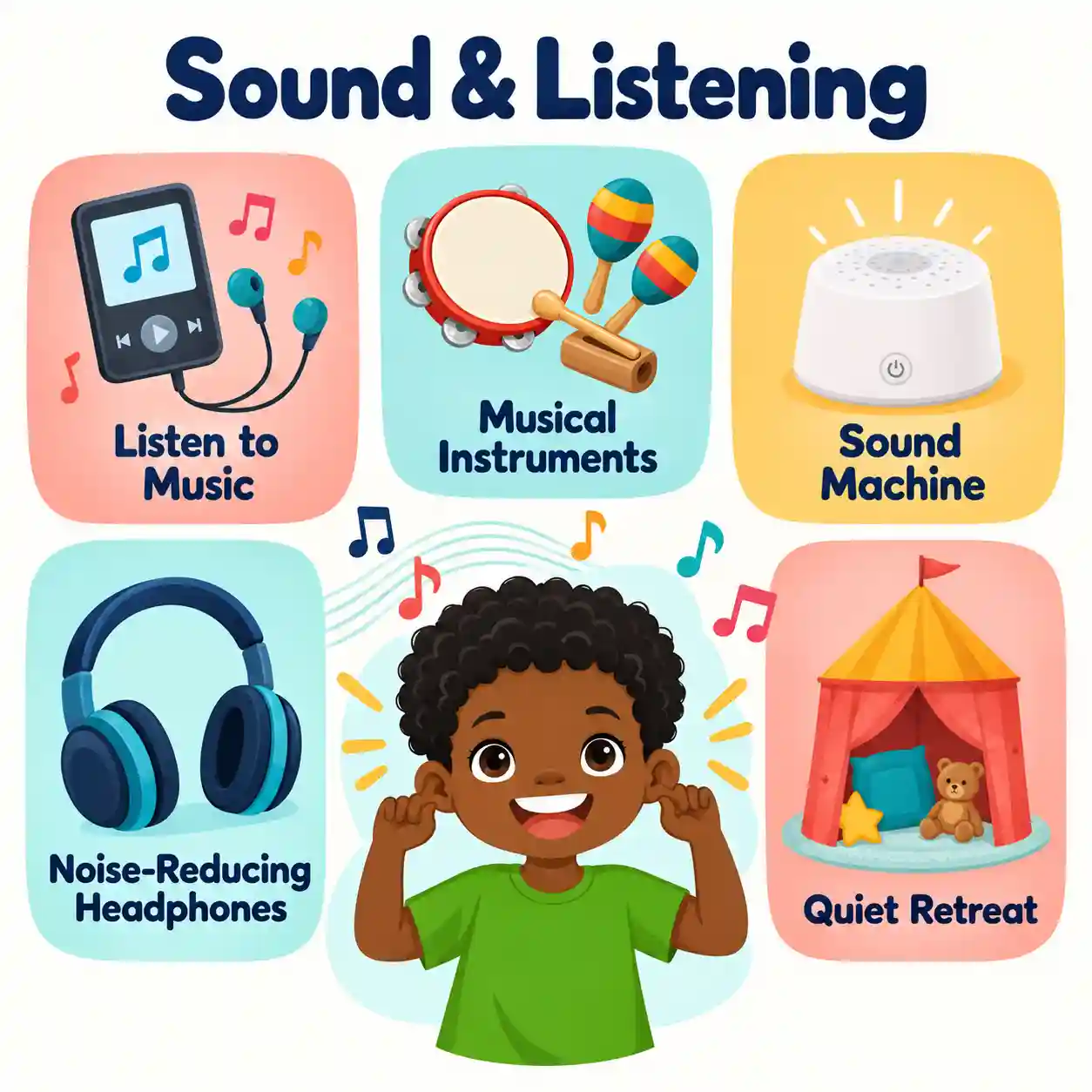
- MUSICAL INSTRUMENTS
- SOUND MACHINE
- NOISE MINIZING EARPHONES
- LISTEN TO MUSIC
- QUIET RETREAT
This system processes sounds and helps your child:
- Understand speech
- Focus in noisy environments
- Respond appropriately to sounds
Why It Matters
It is essential for communication, learning, and attention.
Signs of Difficulty
- Easily distracted by noise
- Covering ears or sensitivity to sound
- Difficulty following instructions
- Trouble focusing in class
Activities to Support It
- Listening games (identify sounds)
- Music and rhythm activities
- Clapping or repeating patterns
- Singing songs with actions
5. Visual System (Sight & Interpretation)
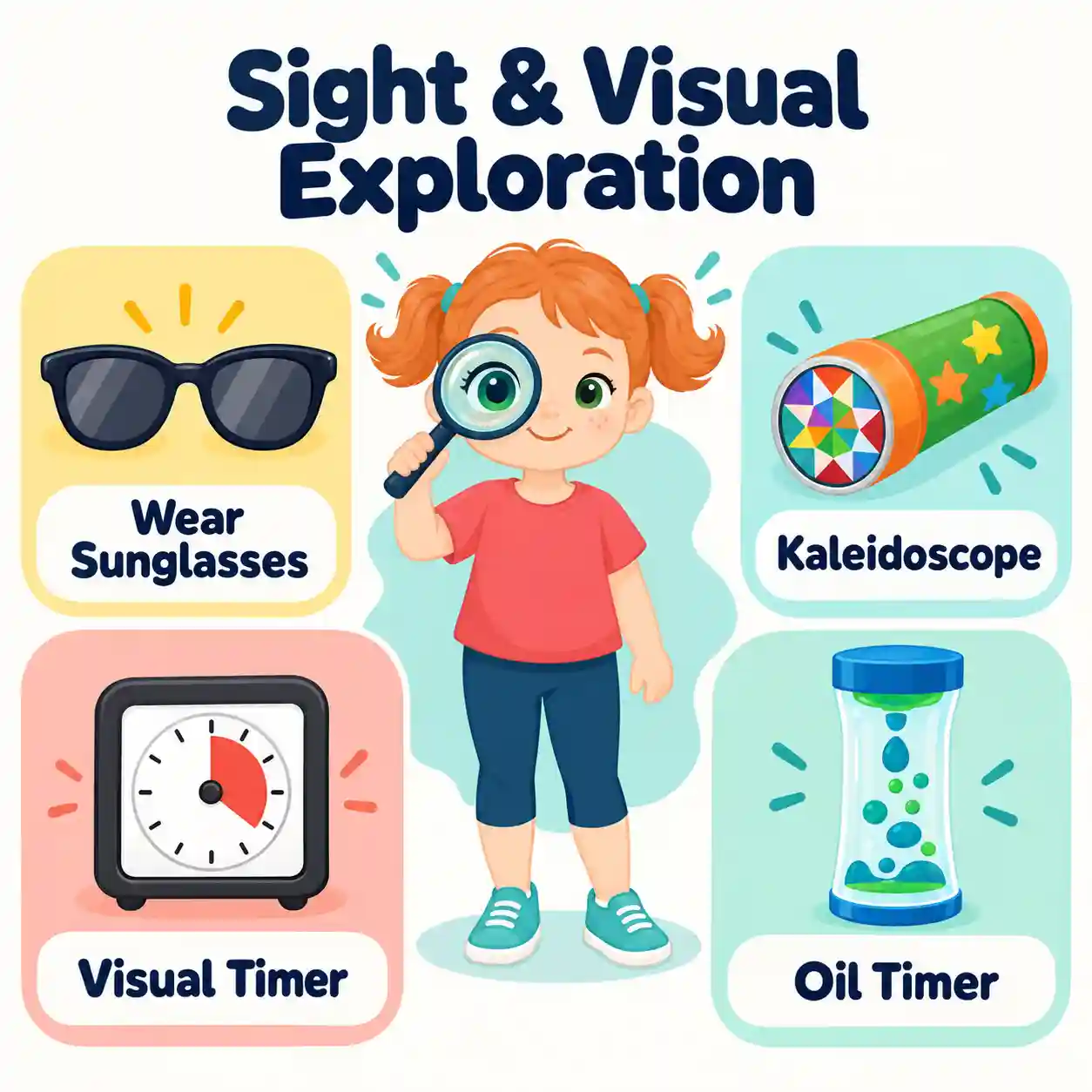
- WEAR SUNGLASSES
- KALEIDOSCOPE
- VISUAL TIMER
- OIL TIMER
This system is not just about seeing clearly, it's about understanding what is seen.
Why It Matters
It supports reading, writing, coordination, and daily tasks.
Signs of Difficulty
- Trouble tracking words while reading
- Difficulty with puzzles or matching
- Poor hand-eye coordination
- Losing place while reading
Activities to Support It
- Puzzles and matching games
- Ball tracking activities
- Scavenger hunts
- Sorting and organizing objects
6. Olfactory System (Smell)
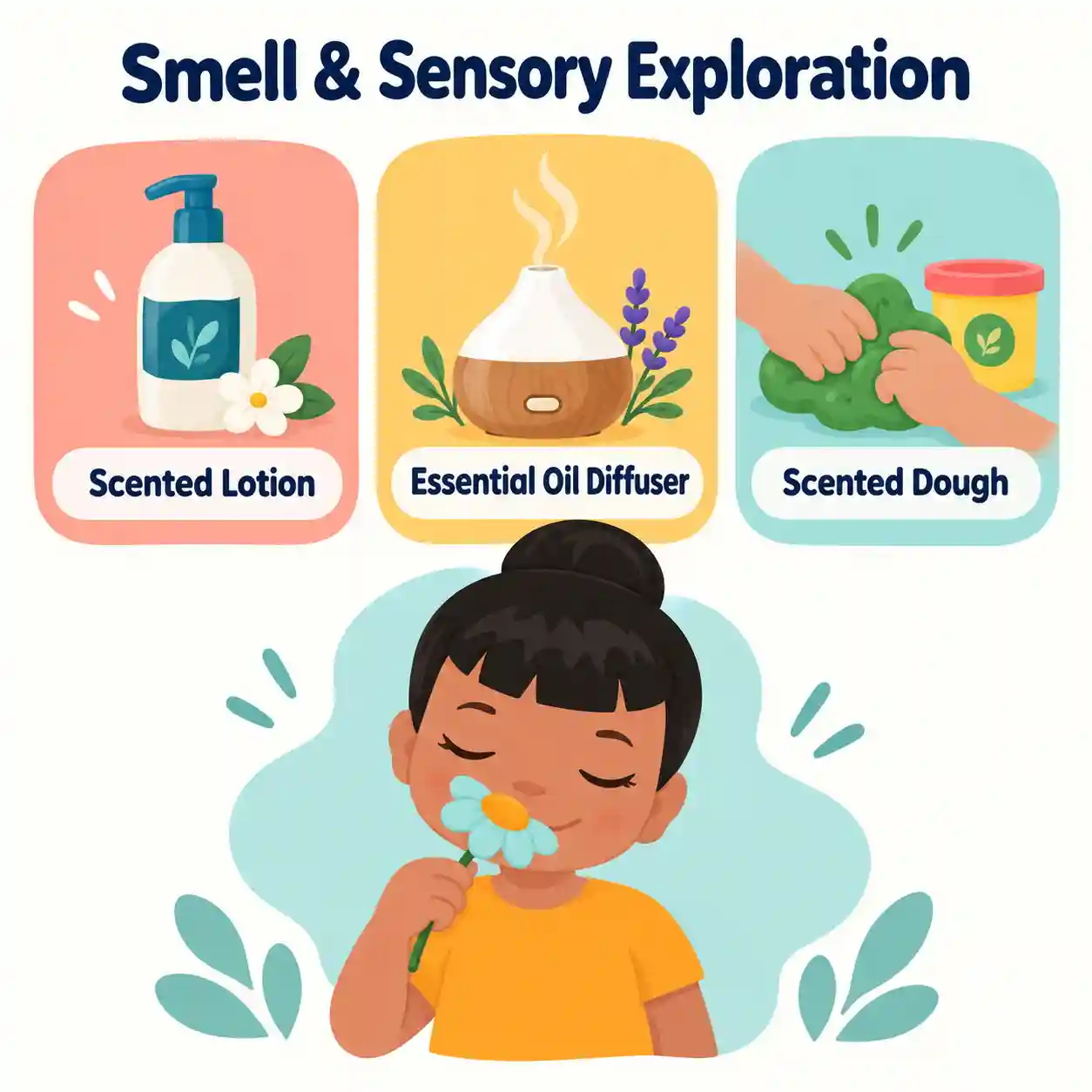
This system helps your child detect and respond to smells and is closely linked to memory and emotions.
Why It Matters
It influences food preferences, emotional responses, and environmental awareness.
Signs of Difficulty
- Strong reactions to smells
- Avoidance of certain foods
- Not noticing strong odors
Activities to Support It
- Smelling flowers, herbs, or spices
- Cooking together
- Identifying different scents
Gustatory System (Taste)
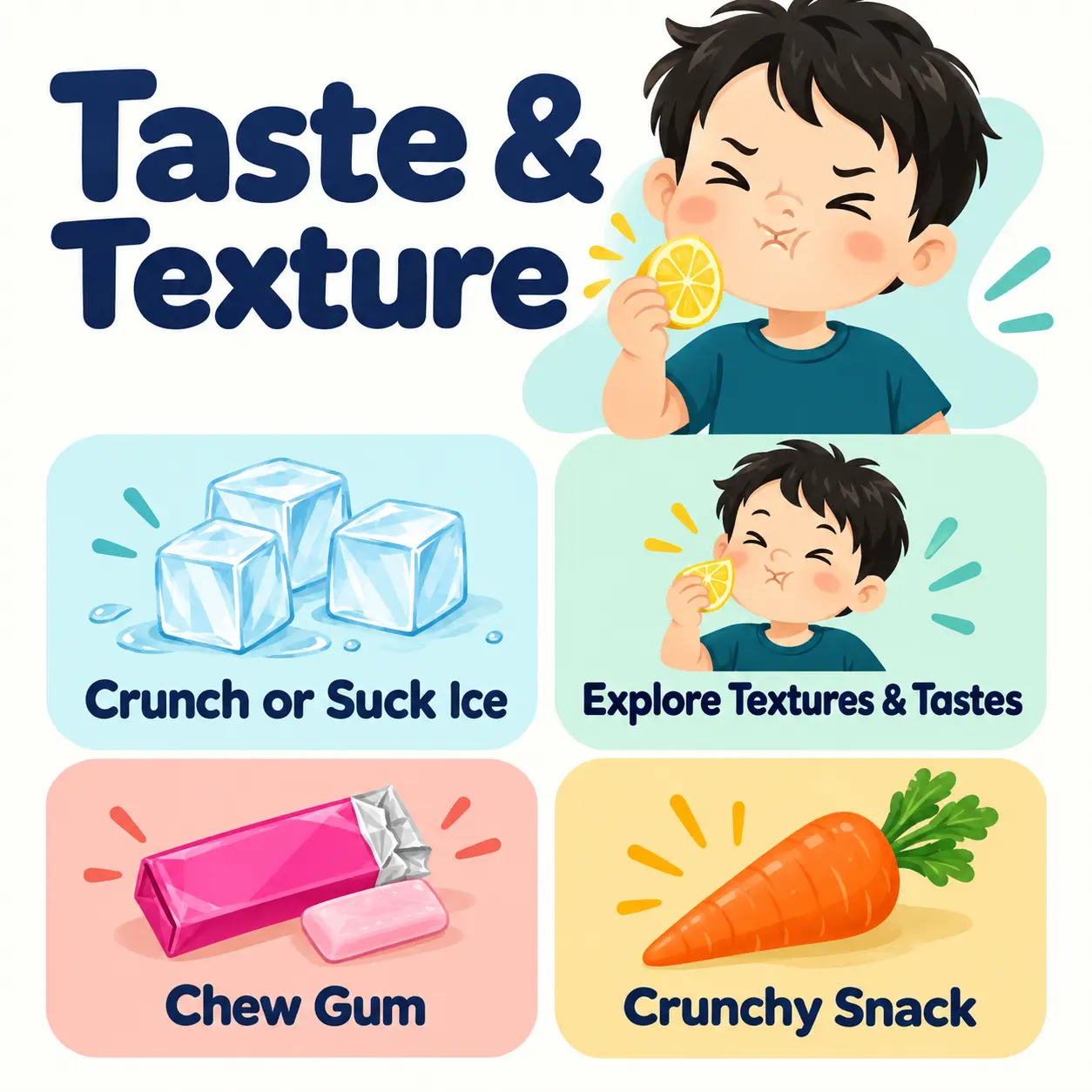
The gustatory system helps your child taste and recognize flavors such as sweet, salty, sour, bitter, and umami.
Why It's Important
- Supports healthy eating habits
- Helps with food acceptance
- Works closely with smell and texture
Signs of Difficulty
- Picky eating
- Avoidance of certain textures or tastes
- Gagging or refusal of new foods
Helpful Activities
- Introducing a variety of foods gradually
- Cooking together
- Exploring different textures and flavors
7. Interoception (Internal Body Awareness)
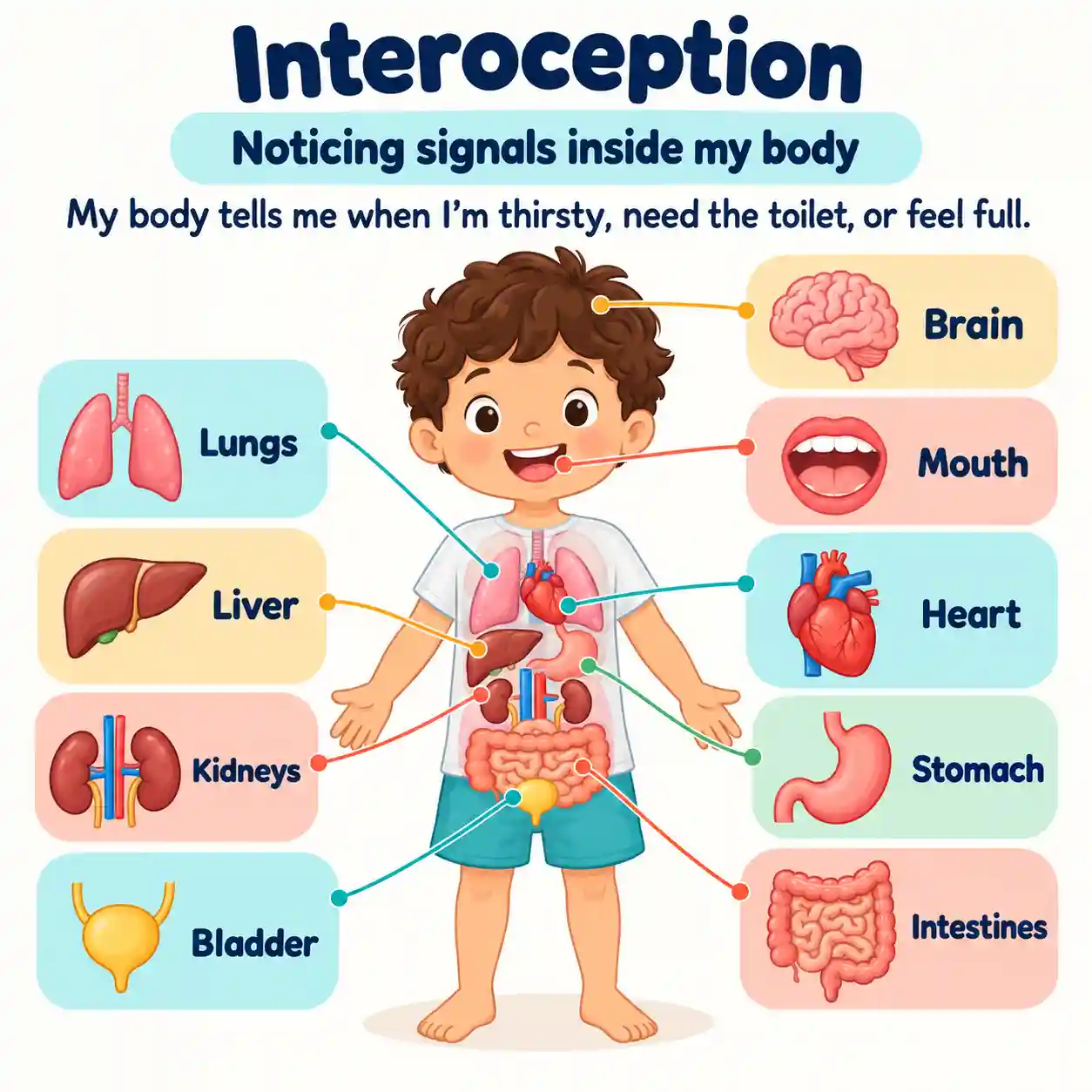
Helps me feel when I'm thirsty, lets me know when I have to use the potty, and tells me when I've eaten too much!
This is the body's ability to understand internal signals such as:
- Hunger
- Thirst
- Pain
- Emotions
Why It Matters
It helps children recognize how they feel and respond appropriately.
Signs of Difficulty
- Not recognizing hunger or thirst
- Difficulty identifying emotions
- Sudden emotional outbursts
- Trouble with toilet awareness
Activities to Support It
- Asking children how their body feels
- Teaching emotion labels
- Breathing and mindfulness activities
- Body awareness exercises (e.g., feeling heartbeat after running)
How All the Senses Work Together
No sensory system works alone. These systems constantly interact to help your child:
- Stay focused
- Move smoothly
- Regulate emotions
- Learn new skills
When one or more systems are not functioning efficiently, it can affect behavior, attention, and daily activities.
Signs of Sensory Difficulties
- Overreaction or underreaction to sounds, textures, or movement
- Clumsiness or coordination issues
- Difficulty staying calm or focused
- Avoidance of certain activities
Enquire about Occupational Therapy
Tell us a little about your child and we will reply within one working day. Call +91 82202 30388 if you would rather talk it through.
Monday to Saturday, 9:00 am to 9:00 pm
How Occupational Therapy Helps
Occupational therapy (OT) supports children with sensory processing difficulties by using strategies tailored to their individual needs. One commonly used approach is a “sensory diet.”
A sensory diet is not related to food. Instead, it is a carefully planned set of sensory activities and environmental adjustments designed to help a child stay regulated and focused throughout the day.
These activities are selected based on the child’s:
- Interests
- Sensory needs
- Daily routines
An occupational therapist works closely with parents and teachers to create a sensory diet that can be used both at home and in school.
How You Can Help
- Encourage active play (jumping, climbing, running)
- Provide different sensory eperiences
- Create simple obstacle courses
- Allow safe exploration of textures (sand, water, playdough)
Traveling with Children with ADHD, Anxiety, or Sensory Needs can also feel overwhelming.
Changes in routine, new environments, and unfamiliar sensory inputs can make travel challenging. With some preparation, you can make the experience smoother for both you and your child.
Helpful Tips for a Smoother Trip
1. Prepare Your Child in Advance
Talk about the trip ahead of time. Explain where you're going, what they'll see, and what to expect. This reduces uncertainty and anxiety.
2. Maintain Familiar Routines
Try to keep sleep, meals, and rest times close to your child's usual schedule.
3. Pack Smart
Bring familiar snacks, favorite toys, and sensory tools (like headphones or fidget items). These can help your child feel secure.
4. Plan Movement Breaks
Long travel periods can be difficult. Schedule regular breaks for movement and stretching.
5. Choose a Calm Environment
If staying in a hotel or resort, opt for quieter areas to allow your child time to relax.
6. Be Emotionally Supportive
It's okay if your child feels anxious. Acknowledge their feelings and offer reassurance.
7. Stay Flexible
Not everything will go as planned, and that's okay. Focus on connection and enjoyment rather than a strict schedule.
Final Thoughts for Parents
Every child develops differently, but foundational skills like movement, sensory processing, and emotional regulation are essential for growth.
By incorporating simple activities into daily routines and being attentive to your child’s needs, you can support their development in a meaningful way.
If you notice ongoing challenges, seeking guidance from an occupational therapist can make a significant difference.
Enquire about Occupational Therapy
Tell us a little about your child and we will reply within one working day. Call +91 82202 30388 if you would rather talk it through.
Monday to Saturday, 9:00 am to 9:00 pm